Request a call backAccess the course agenda

IRATA safety bulletins: safety feedback

15 January 2026

For all rope access technicians who have taken an IRATA (or other) training course in France or abroad, as well as for companies wishing to keep abreast of feedback on rope access work, HTC Techniques Verticales publishes on this site the SAFETY BULLETINS issued by the official office and safety commissions of IRATA certification (ISO…

HTC-travail-hauteur-secours

For all rope access technicians who have taken an IRATA (or other) training course in France or abroad, as well as for companies wishing to keep abreast of feedback on rope access work, HTC Techniques Verticales publishes on this site the SAFETY BULLETINS issued by the official office and safety commissions of IRATA certification (ISO 17024):
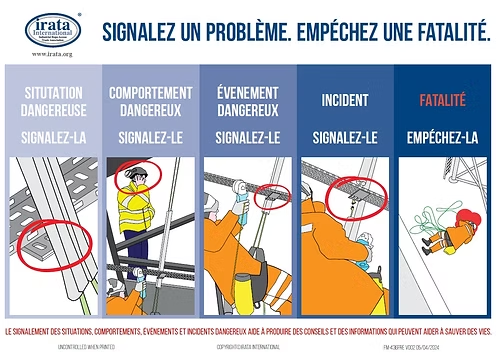
Click here to download the latest SAFETY BULLETINS:

SAFETY BULLETIN N°50

SAFETY BULLETIN N°49

SAFETY BULLETIN N°48

SAFETY BULLETIN N°47

SAFETY BULLETIN N°46

SAFETY BULLETIN N°45

Below is a video produced by the IRATA rope access certification organization to help all rope access technicians and workers at height take into account the management and protection of angles and ropes on construction sites, and the management and safety of teams on a daily basis.
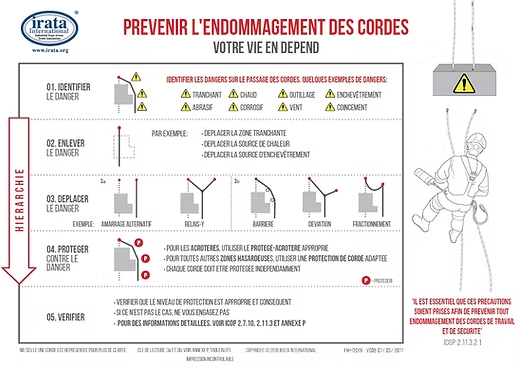
Risk hierarchy for managing rope friction on corners and edges when fitting ropes.

Source : IRATA HO (2016)
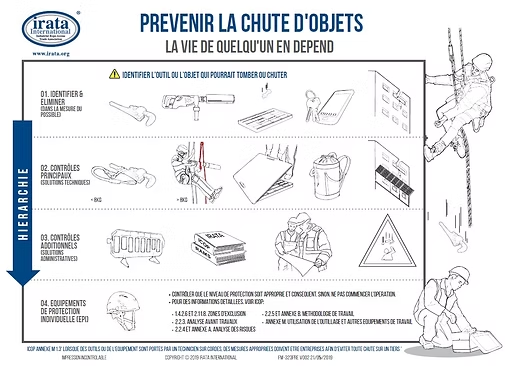
Risk hierarchy for tool management and safety on rope access sites.

Source : IRATA HO (2019)

Our IRATA rope access technicians are at your disposal to answer any questions you may have about IRATA rope access safety flashes, or any other questions related to your activities and work sites involving work at height, difficult access work and risk prevention.
Any project?
Any regulatory requirement?

You can call us at 04 42 01 19 95

Require a quick quote

Articles you might find interesting

HTC-149-main-corde
10 July 2026

GWO Sea Survival: What the Sea Survival Module Covers

Working on an offshore wind turbine involves operating in a demanding environment where risks associated with the sea are ever-present. That is why the GWO Survival at Sea training course is an essential step for all technicians who will be working on offshore wind farms. At our training facility in Marseille (FRANCE), this module provides…
Read the article